Download the handout for this sermon (pdf).
Chris Eller discussed the concept of spiritual warfare, emphasizing the battle against Satan, who is identified as the serpent in Genesis 3. He explained Satan’s strategies of deception, division, discouragement, and temptation, using examples like Mormonism and Jehovah’s Witnesses. Eller highlighted the importance of knowing one’s enemy and oneself, referencing Sun Tzu’s “The Art of War.” He outlined Satan’s influence through various human agents and structures, from average citizens to global elites. Eller encouraged believers to put on the full armor of God, stay prayerful, and maintain community to resist Satan’s forces effectively.
Action Items
- Pray for yourself and your children/grandchildren to stand firm in the faith.
- Review the principles of putting on the full armor of God and applying them daily.
- Identify and close any open doors or areas of temptation in your life.
- Renew your mind daily by filling it with Scripture.
- Stay connected to the body of Christ and avoid isolation.
Outline
Introduction and Welcome
- Introduces the topic of the morning: spiritual warfare and the enemy.
The Fall and Its Consequences

- Chris Eller explains the concept of the fall through Genesis 3, highlighting Adam and Eve’s nakedness and shame.
- Discusses the serpent’s role in the garden and Satan’s deception of Eve.
- Introduces the concept of legalism and how Satan twists God’s words.
- Emphasizes the ongoing battle from creation to the end of time.
Understanding the Enemy: Satan
- References the Chinese philosopher Sun Tzu’s advice on knowing the enemy and oneself.
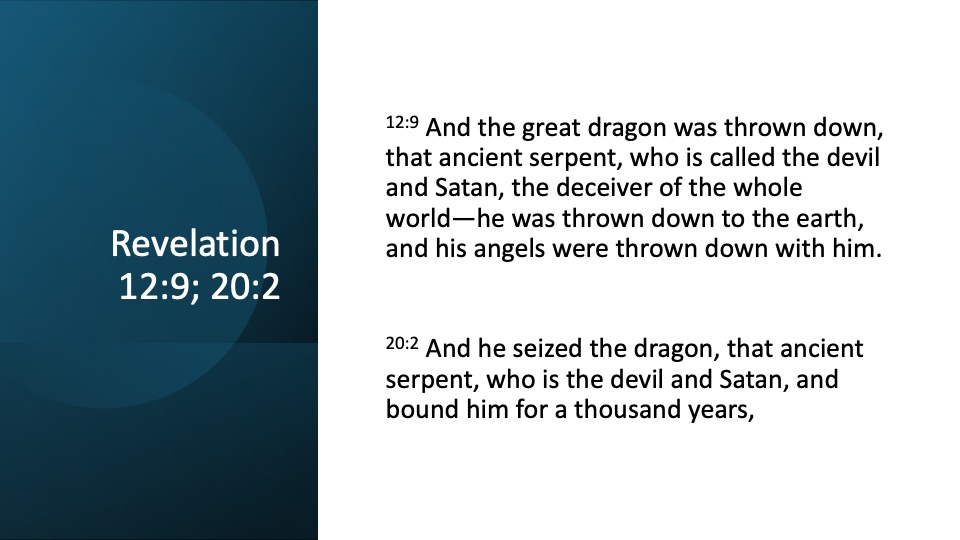
- Identifies the serpent as Satan, the adversary of the world, and explains Satan’s goal to defeat God.
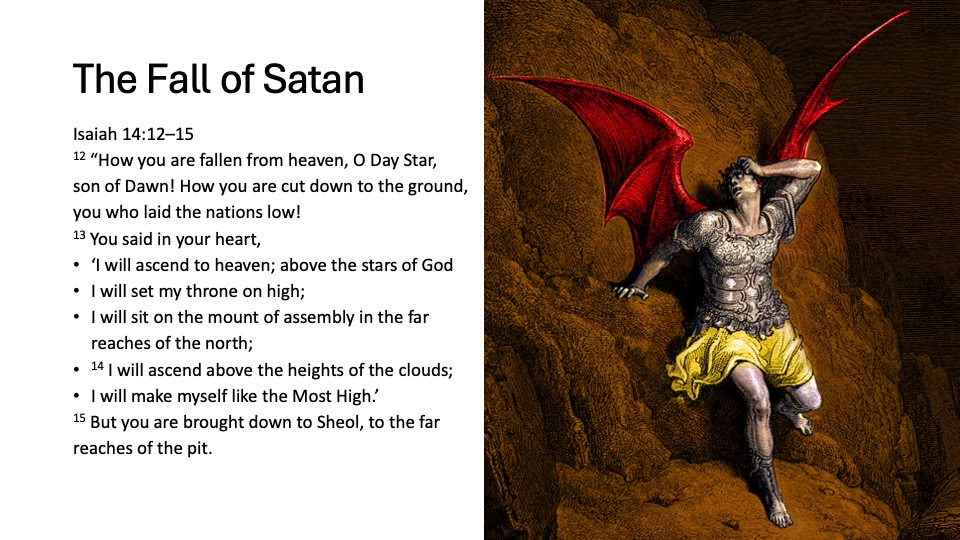
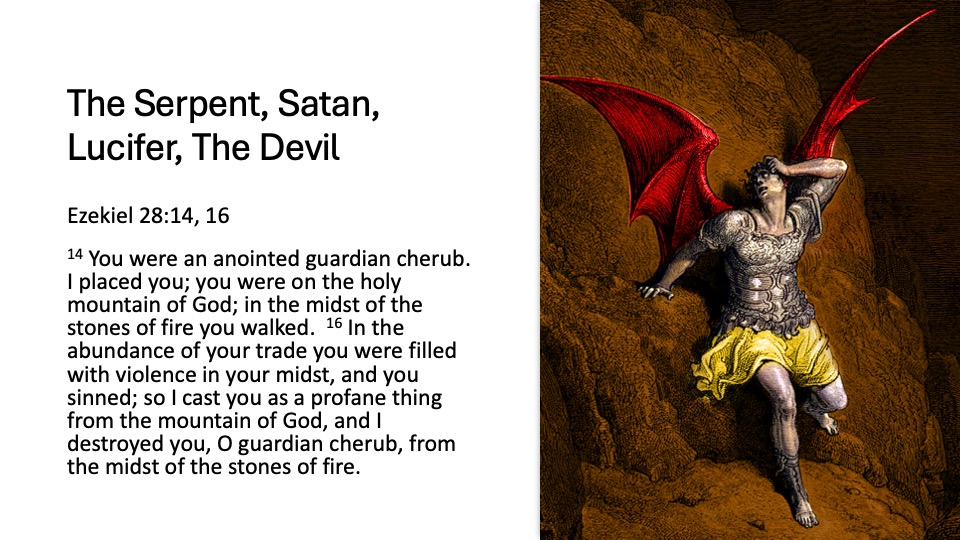
- Describes Satan’s fall from grace, his sin of wanting to be like God, and his desire for worship.
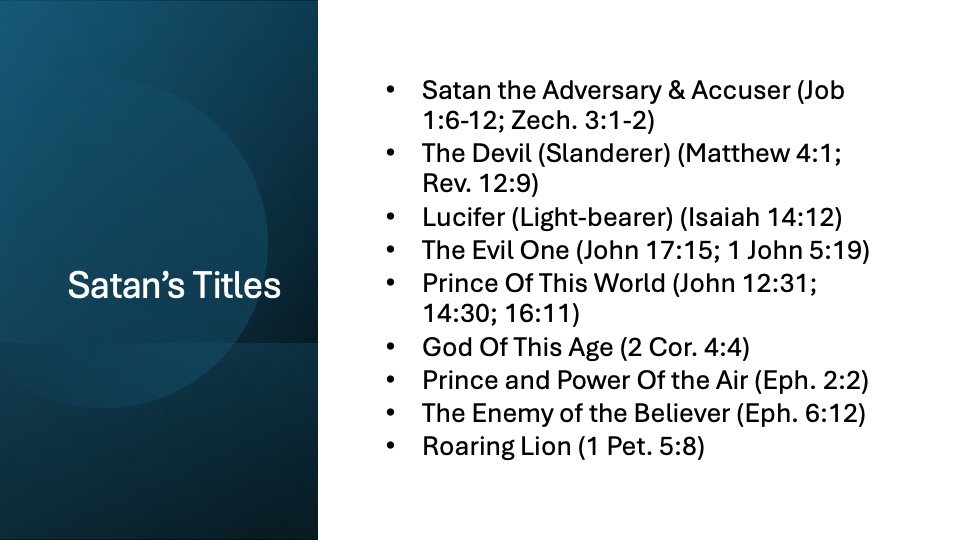
- Lists various titles for Satan, including adversary, devil, and prince of the world.
Satan’s Domain and Strategies
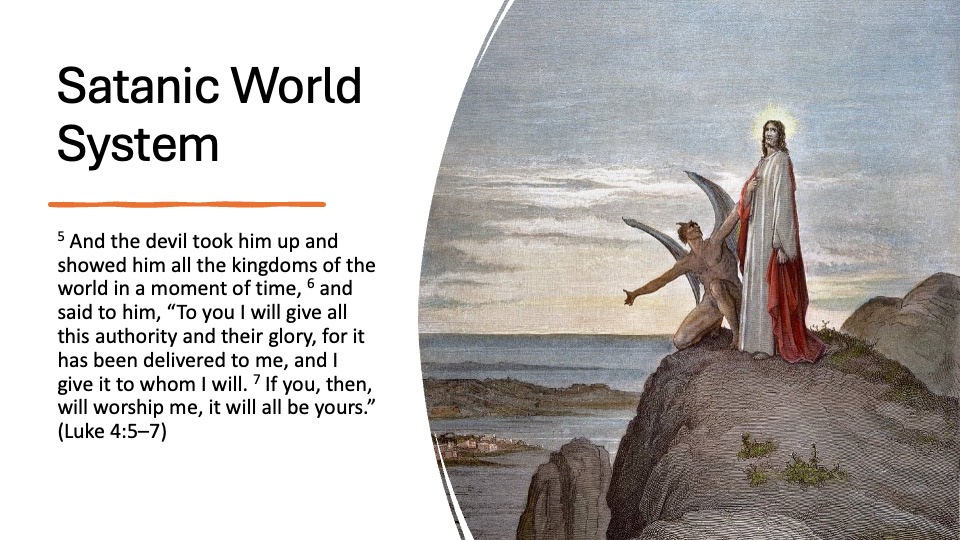
- Describes Satan’s domain as the world, supported by Luke 4:5-7, where Jesus is tempted by Satan.
- Emphasizes that believers are pilgrims in this world, not its permanent inhabitants.
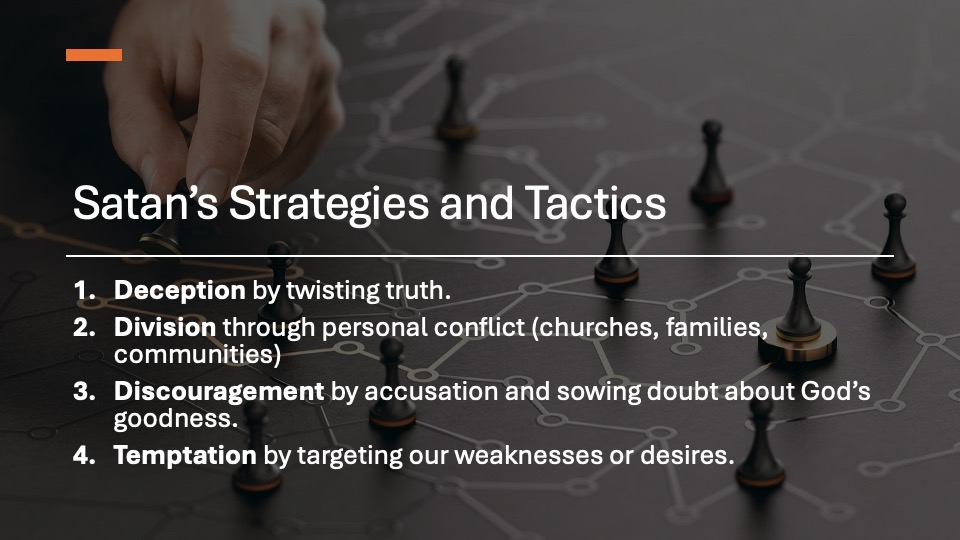
- Lists Satan’s strategies: deception, division, discouragement, and temptation.
- Provides examples of deception, such as Mormonism and Jehovah’s Witnesses, and discusses the impact of personal conflict and discouragement.
Satan’s Army and Influence
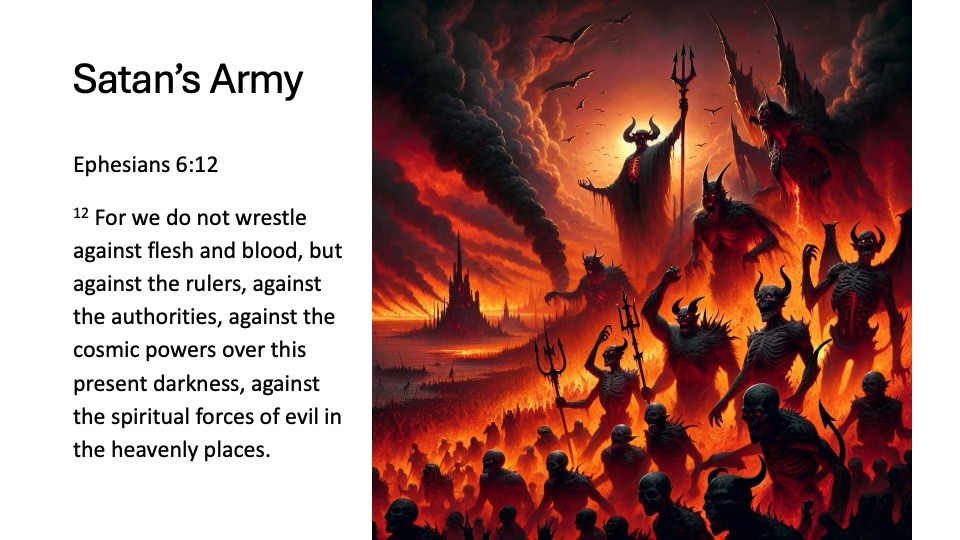
- References Ephesians 6:12 to explain that believers wrestle against spiritual forces, not flesh and blood.
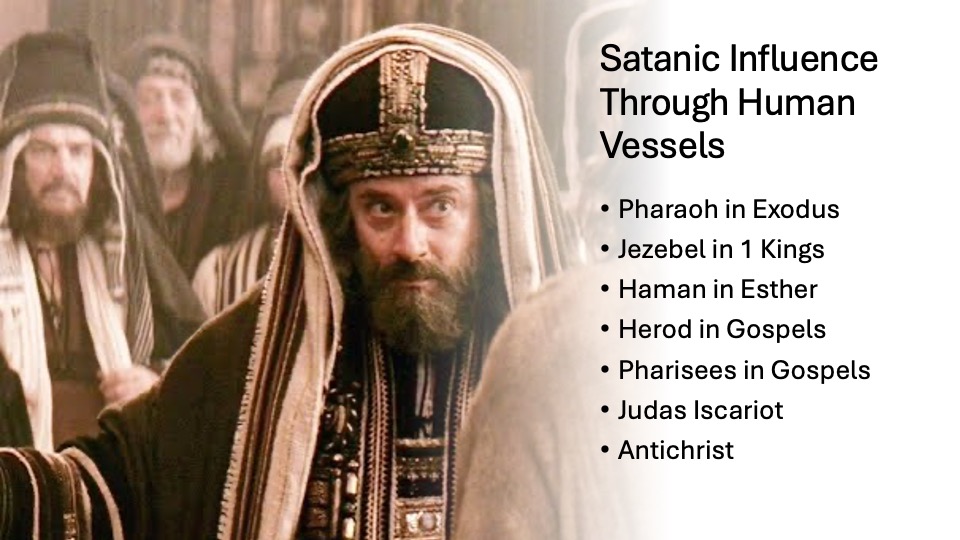
- Lists examples of Satan’s influence through human beings, such as Pharaoh, Jezebel, and Judas Iscariot.
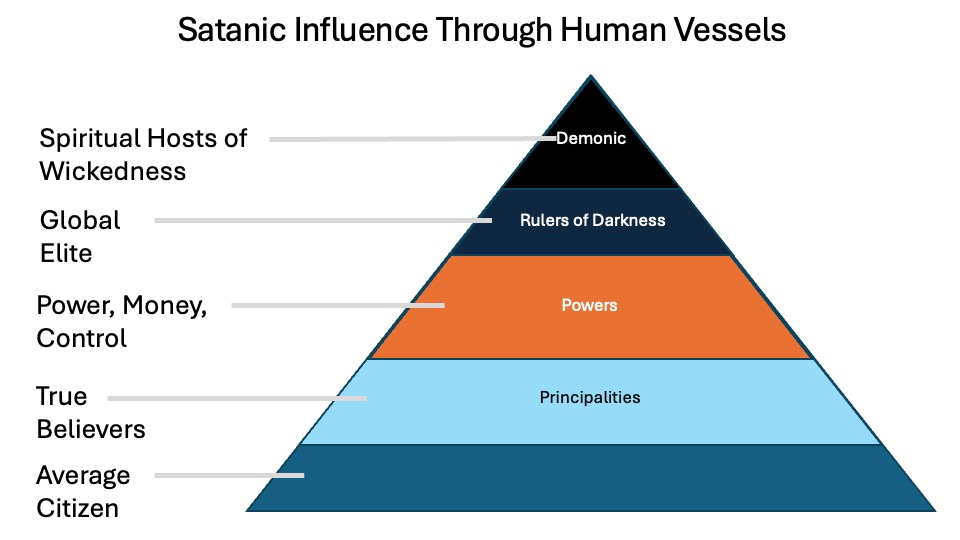
- Describes the hierarchy of Satan’s influence: average citizens, true believers, power money and control, global elites, and the demonic realm.
- Provides examples of modern-day influences, such as mainstream media, Hollywood celebrities, and public education.

Satan’s Doctrine and Transgenderism
- Discusses Satan’s doctrine, which perverts God’s creation and mankind.
- Uses transgenderism as an example of how Satan’s influence leads to the perversion of God’s creation.
- Highlights the historical context of gender dysphoria as a mental illness.
- Compares the cruelty of affirming eating disorders to affirming gender dysphoria.

Standing in Defense Against Satan
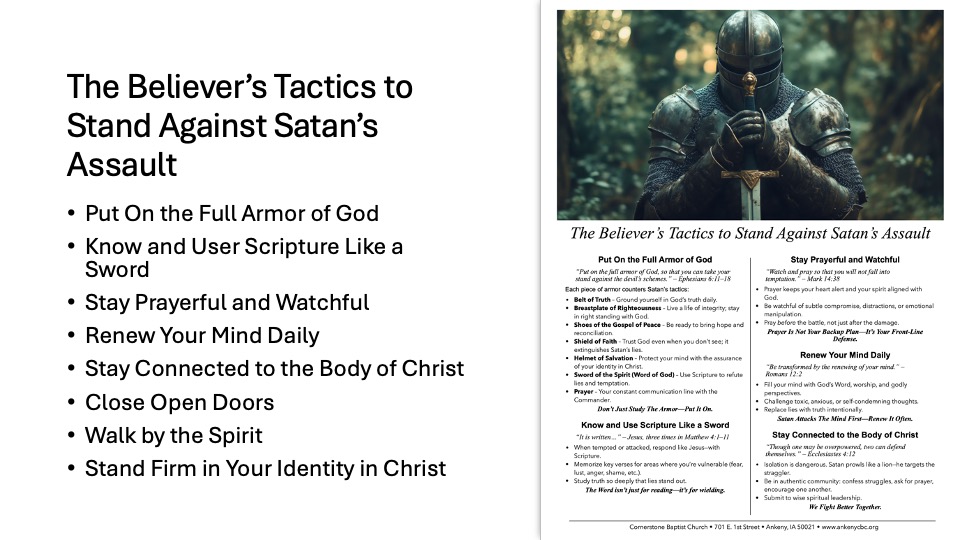
- Emphasizes the importance of putting on the full armor of God, as described in Ephesians 6.
- Encourages believers to use scripture as a sword and to stay prayerful and watchful.
- Stresses the importance of renewing the mind daily and staying connected to the body of Christ.
- Advises closing open doors that give the devil a foothold and walking by the Spirit.
Final Thoughts and Prayer
- Encourages believers to stand firm in their identity in Christ and to remember the victory won at the cross.
- Emphasizes that believers are fighting from a place of victory, not for victory.
- Urges believers to pray for themselves, their children, and grandchildren.
- Closes with a prayer, thanking God for the church, the word, and the victory in Jesus.

 ChrisEller.org | Connect the dots.